
Implantology · Targu Jiu
Dental implants in Targu Jiu
From 2,250 leiWe offer solutions for replacing missing teeth with titanium or zirconia dental implants, aiming to restore both the look of the smile and the function of the teeth. Each treatment is planned individually, according to the patient's particulars, using 3D imaging (CBCT) carried out at the clinic when indicated. Prosthetic work is made in the clinic's own dental laboratory or in collaboration with other laboratories in Romania.
What is a dental implant?
A dental implant is a piece made of titanium or zirconia, generally shaped like a screw, which is placed in the upper or lower jawbone to replace the root of a missing natural tooth.
The surface of implants is designed and treated to encourage integration into the bone, a process called osseointegration.
The implant serves as a support for a crown, a bridge or a denture, helping to restore the function and appearance of the teeth.
When a single tooth is replaced, the restoration is usually made up of three components: the dental implant (the part inside the bone), the abutment and the dental crown.
What are the advantages of a dental implant?
- Durability: with proper care and regular check-ups, dental implants can have a long lifespan.
- Protecting the neighbouring teeth: unlike conventional bridges, implants do not require grinding down the healthy teeth next to them.
- Stability: work on an implant is fixed in the bone and does not rest on the neighbouring teeth.
- Restoring the function of the teeth: helps improve chewing and the look of the smile.
- Preserving bone: implants can help reduce bone loss in the area where the natural teeth were lost.
Who can have dental implants?
Dental implants are a solution for people who have lost one or more teeth, once bone growth has finished, as confirmed by a medical assessment.
Good general health, healthy gums, and the quantity and quality of the available bone are important factors for the success of treatment.
Even when there is not enough bone, additional bone augmentation procedures can be carried out in certain situations.
After the consultation and the necessary investigations, the dentist sets the treatment plan that suits each patient, aiming for functional and aesthetic results over the long term.
How does dental implant treatment work?
Treatment starts with a consultation and an assessment of the patient's general and oral health. To reach a correct diagnosis and plan the procedure, the dentist recommends imaging, including dental computed tomography (CBCT), which allows the amount of available bone, the anatomical particulars and the neighbouring structures to be assessed.
Where the available bone is insufficient, a bone augmentation procedure may be needed, when it is possible.
Depending on the area affected and the amount of bone available, the dentist may recommend different procedures, such as:
- Horizontal bone augmentation: to increase the width of the bone;
- Vertical bone augmentation: to increase the height of the bone;
- Sinus lift: to increase bone volume at the back of the upper jaw;
- Post-extraction bone augmentation: to limit bone loss after a tooth is extracted.
These procedures can be carried out before the implant is placed or, in certain cases, at the same appointment, depending on the clinical situation.
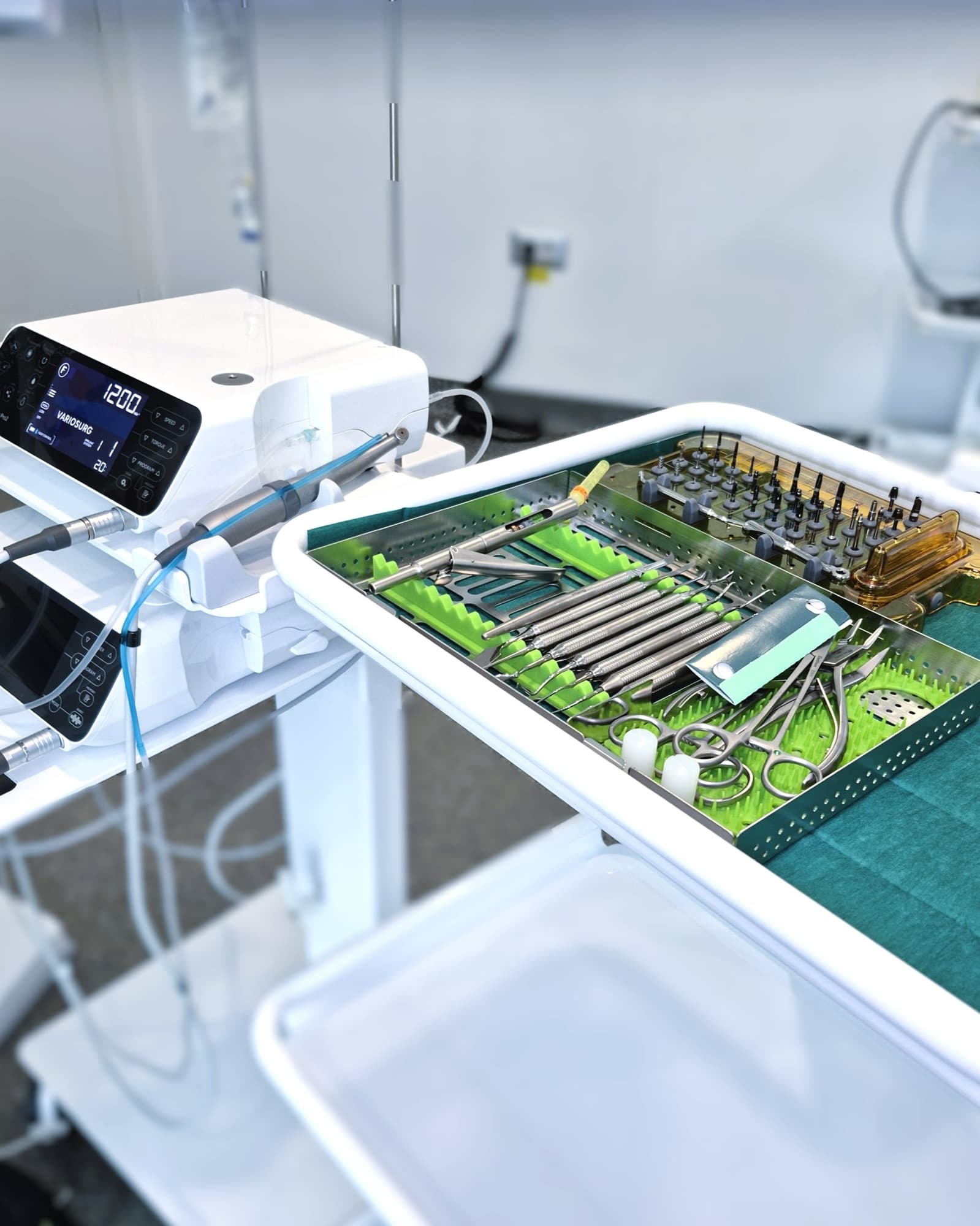
The dental implant is placed in a surgical procedure, usually under local anaesthetic. In most cases, the patient can go home the same day.
After the procedure comes the period of healing and osseointegration, the biological process through which a stable bond forms between the bone and the surface of the implant.
This stage usually lasts between 3 and 6 months, depending on the patient's particulars, the quality of the bone and the complexity of treatment.
In certain situations, the patient may have a temporary prosthetic restoration, which provides appearance and, where conditions allow, function until the final restoration is made.
What does the prosthetic restoration on an implant involve?
When a single tooth is replaced, it usually comprises three components:
- The dental implant: the piece placed in the bone, which replaces the root of the tooth;
- The abutment: the connecting element between the implant and the crown;
- The dental crown: the visible part, which restores the shape, appearance and function of the tooth.
When several missing teeth are replaced, implants can serve as support for fixed bridges or dentures.
Advice for people with dental implants
Keeping up good oral hygiene is essential for the health of the tissues around the implants and for the success of treatment over the long term.
A build-up of plaque can cause two distinct conditions:
- Peri-implant mucositis: inflammation of the soft tissues around the implant, without progressive bone loss.
- Peri-implantitis: inflammation of the tissues around the implant, with progressive loss of the supporting bone, which can lead to losing the implant.
If left untreated, peri-implant mucositis can, in certain situations, progress to peri-implantitis.
To prevent complications, the following are recommended:
- Brushing correctly, at least twice a day;
- Cleaning between the teeth with the aids your dentist recommends;
- Professional cleanings and regular check-ups;
- Avoiding smoking, which can affect healing and the health of the tissues around the implants.
Check-ups are usually recommended every 6 months, but the dentist may set more frequent visits, depending on each patient's particulars and risk factors.
Dental implants: a solution for replacing missing teeth
Dental implants are a solution for replacing one or more missing teeth, helping to restore chewing function, the look of the smile and the patient's comfort.
An important advantage is that implants can replace missing teeth without grinding down the healthy neighbouring teeth. They can also help limit bone loss in the area.
At Hevadent, we use several dental implant systems, selected according to each patient's particulars and the needs of treatment, aiming for functional and aesthetic results over the long term.
Frequently asked questions
What does an implant with a crown cost in total
How long does treatment take from the first visit to the final tooth
How long does the placement procedure itself take
Am I too old for a dental implant
I am afraid of the dentist. What can I do
Can I have an implant if I have diabetes or take anticoagulants
Is smoking a problem for an implant
Can the implant go in straight after an extraction
What does looking after an implant involve
What happens if I need several implants

Dental implants in Targu Jiu
Strada Victoriei nr. 170, Târgu Jiu, Județul Gorj, 210234opposite Lidl
ParkingPrivate patient car park, entered from Strada Victoriei
Phone0374 003 220Mobile0762 622 208WhatsApp0762 622 208Emailoffice@hevadent.ro
Opening hours
- Monday – Thursday
- 08:30 – 19:30
- Friday
- 08:30 – 15:00
- Saturday – Sunday
- Closed
Related treatments
Book an implantology consultation
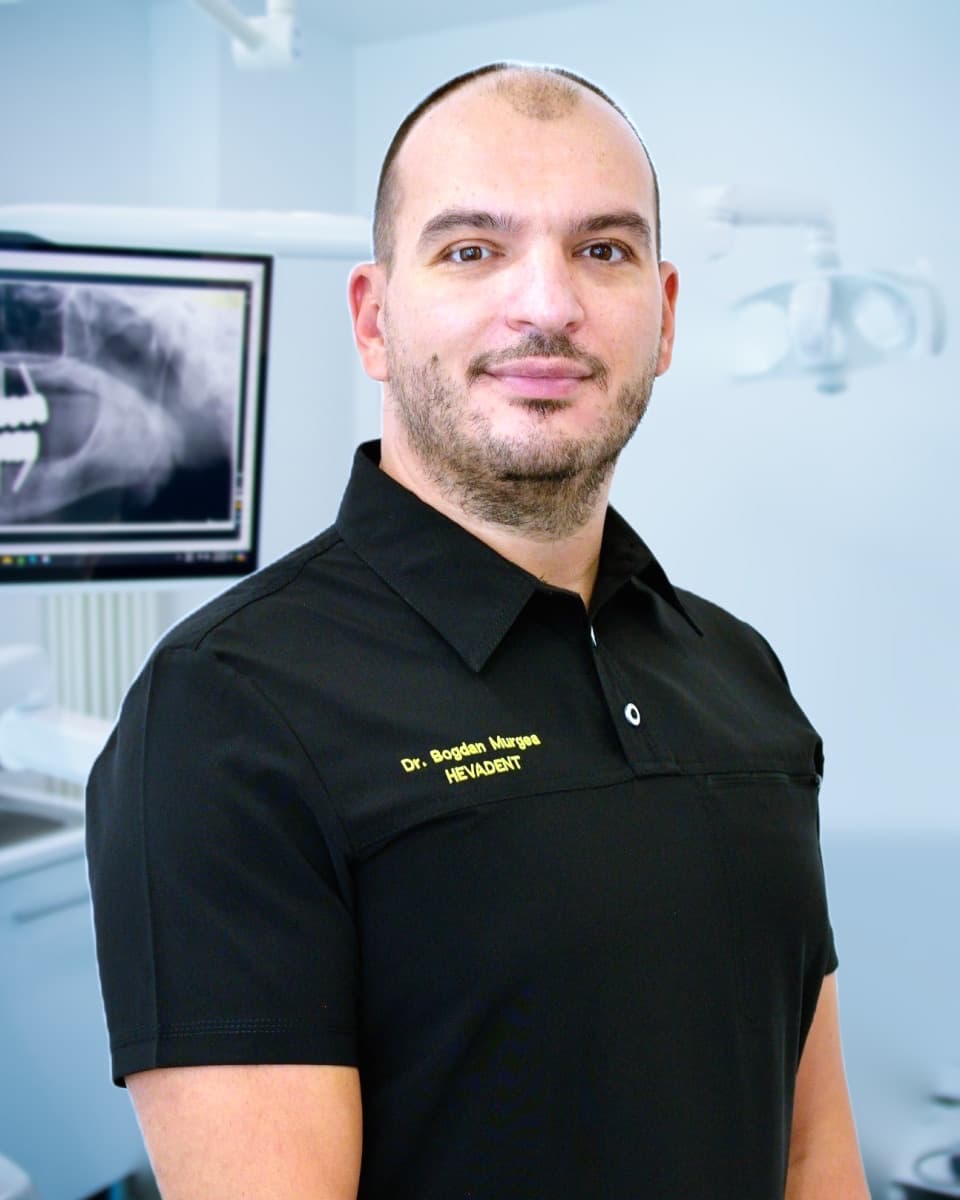
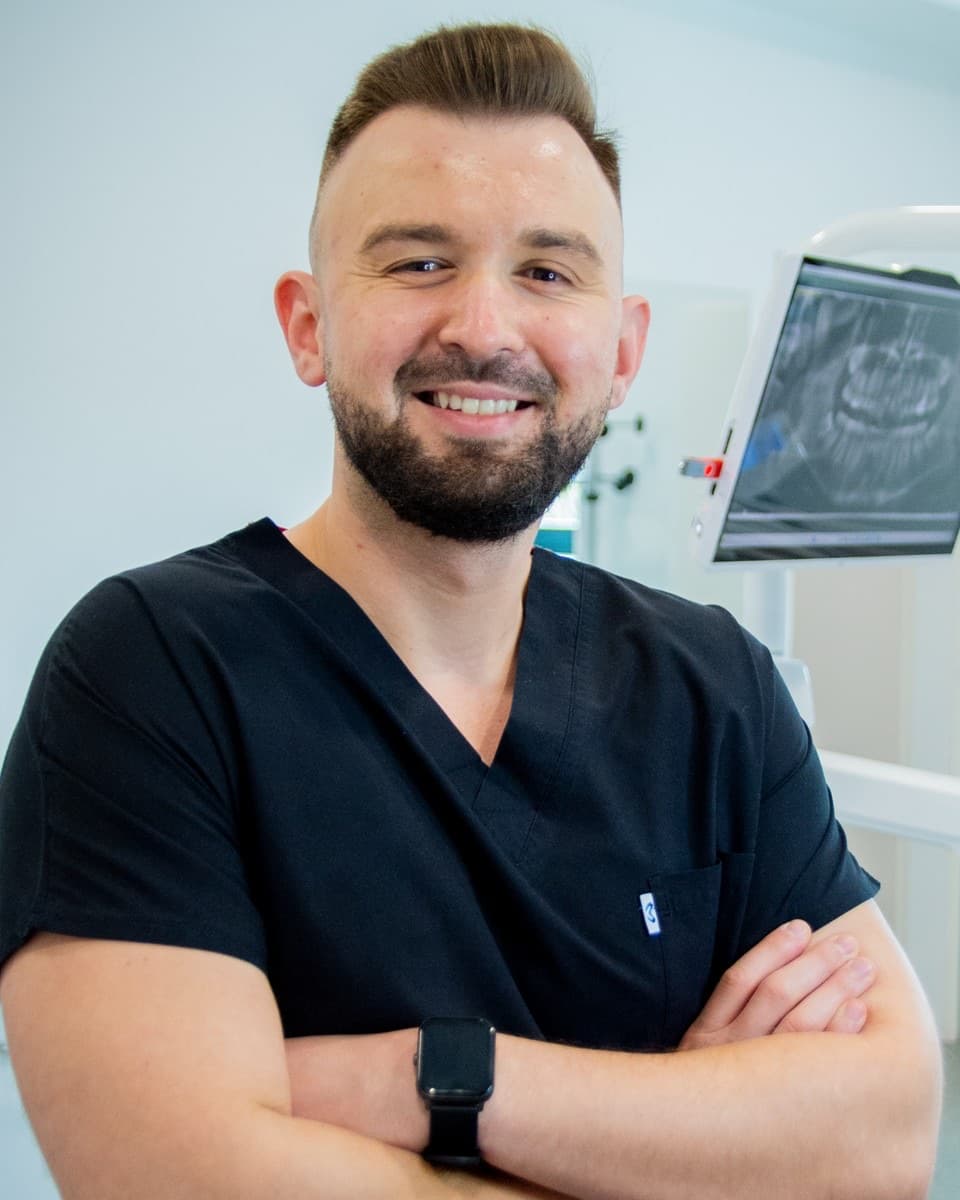
Dr. Valentin Bogdan Murgea, with competency in implantology and in dental radiology, Dr. Paul Pegeanu, medic specialist in dento-alveolar surgery (Romanian specialist grade), and Dr. Eduard Ciuca, medic specialist in oral and maxillofacial surgery (Romanian specialist grade), handle the clinic's implant cases. Ring 0374 003 220 or fill in the booking form.