
Dental radiology · Targu Jiu
Dental X-rays and CBCT in Targu Jiu
From 40 leiWe have our own dental radiology laboratory, with digital equipment that allows imaging with optimised radiation doses, needed for diagnosing and planning dental treatment. We take intraoral and panoramic X-rays, lateral cephalograms and CBCT scans. The laboratory is run by medical staff trained in dental radiology.
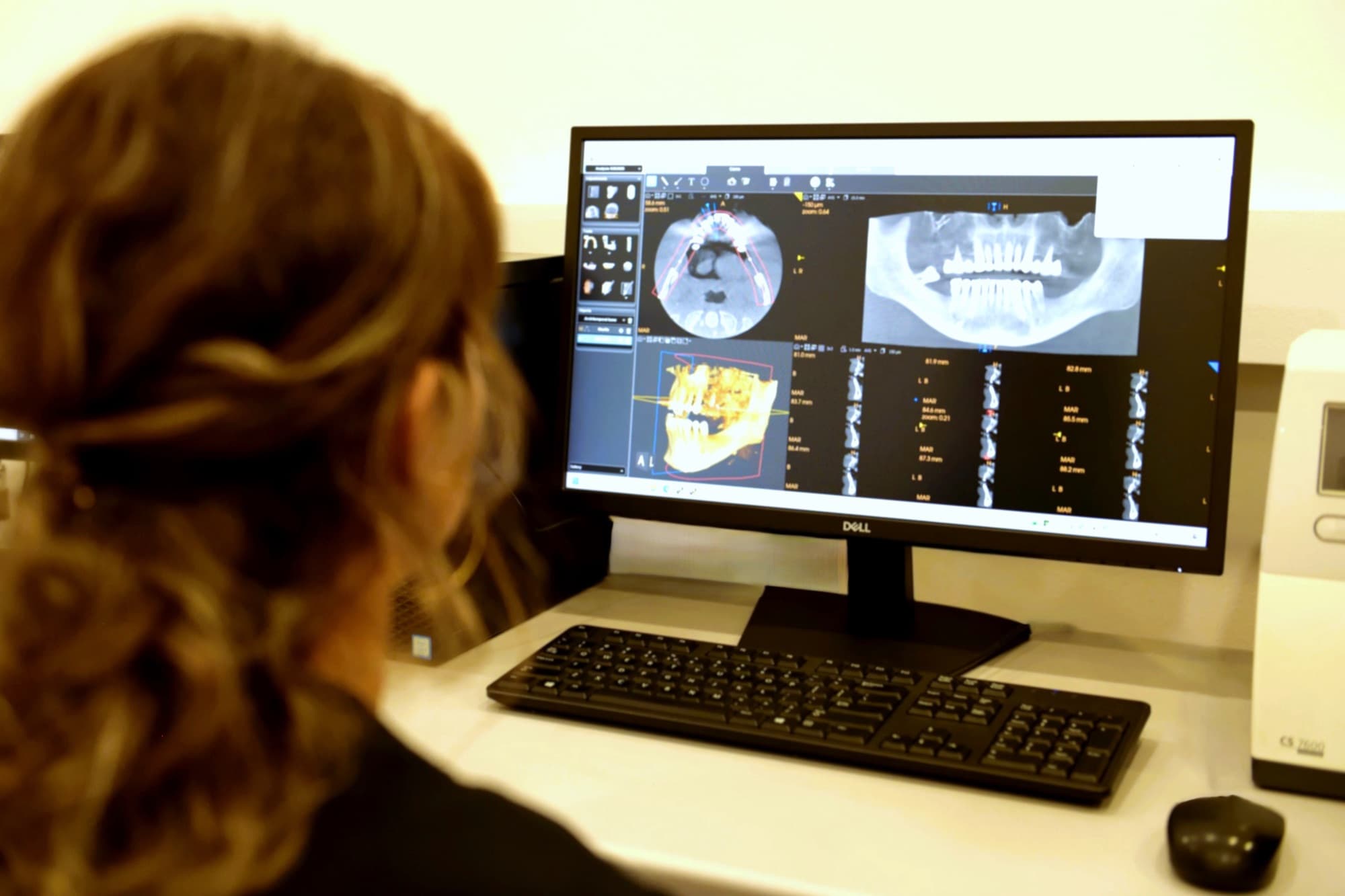
What exactly is a dental X-ray?
A dental X-ray is an image of one tooth, several teeth or all of them, together with the bone and the neighbouring anatomical structures, taken to diagnose dental conditions.
It lets the dentist see details that are not visible to the naked eye, such as the internal structure of the teeth, the roots and the supporting bone.
These images are obtained with X-rays, which pass through the tissues and provide important information for reaching a diagnosis and planning treatment.
What can the dentist learn from a dental X-ray?
Depending on the type of radiological investigation, the dentist can identify or assess:
- Decay that is not visible on clinical examination;
- How far a cavity that looks small on the surface really extends;
- Signs of dental infection;
- Decay under or near restorations and fillings;
- The anatomy of the roots and root canals;
- Bone lesions, including cysts;
- Teeth impacted in the bone;
- The condition of teeth under prosthetic work;
- The position and development of wisdom teeth;
- The position and shape of the roots;
- Bone loss associated with gum disease.
What radiological investigations do we carry out at Hevadent?
At Hevadent, we have our own dental radiology laboratory, where we carry out:
- Intraoral dental X-rays (RVG): for a detailed examination of the teeth and the structures around them;
- Panoramic X-rays (orthopantomograms): for an overall image of the teeth, the jaws and the neighbouring anatomical structures;
- Lateral cephalograms: used especially in orthodontics, to assess the relationship between the jaws, the position of the teeth and the bony structures of the face. These investigations provide important information for diagnosis and for drawing up the orthodontic treatment plan;
- Dental computed tomography (CBCT): for three-dimensional images of the anatomical structures, useful in planning dental implants, surgery and other complex treatment. We carry out scans of a half-arch, one arch or both arches, as well as of the maxillary sinus and the temporomandibular joint (TMJ).
All these investigations are carried out at the Hevadent clinic.
Intraoral dental X-rays (RVG) taken for the clinic's patients during treatment are not charged separately.
For the cost of the other radiological investigations, see the Prices section of our website.
Digital dental radiology and patient safety
Digital dental radiology produces clear, detailed images using digital technology that can reduce radiation exposure compared with conventional methods.
At Hevadent, digital images help the dentist reach a diagnosis and plan treatment.
Frequently asked questions
What does it mean that an X-ray is digital
Are dental X-rays dangerous
Can I have an X-ray if I am pregnant
From what age can children have dental X-rays
How long does an investigation take
Do I get the image on film or in digital form
Do I need a referral for a dental X-ray
I gag when the sensor is put in my mouth
The dental radiology team
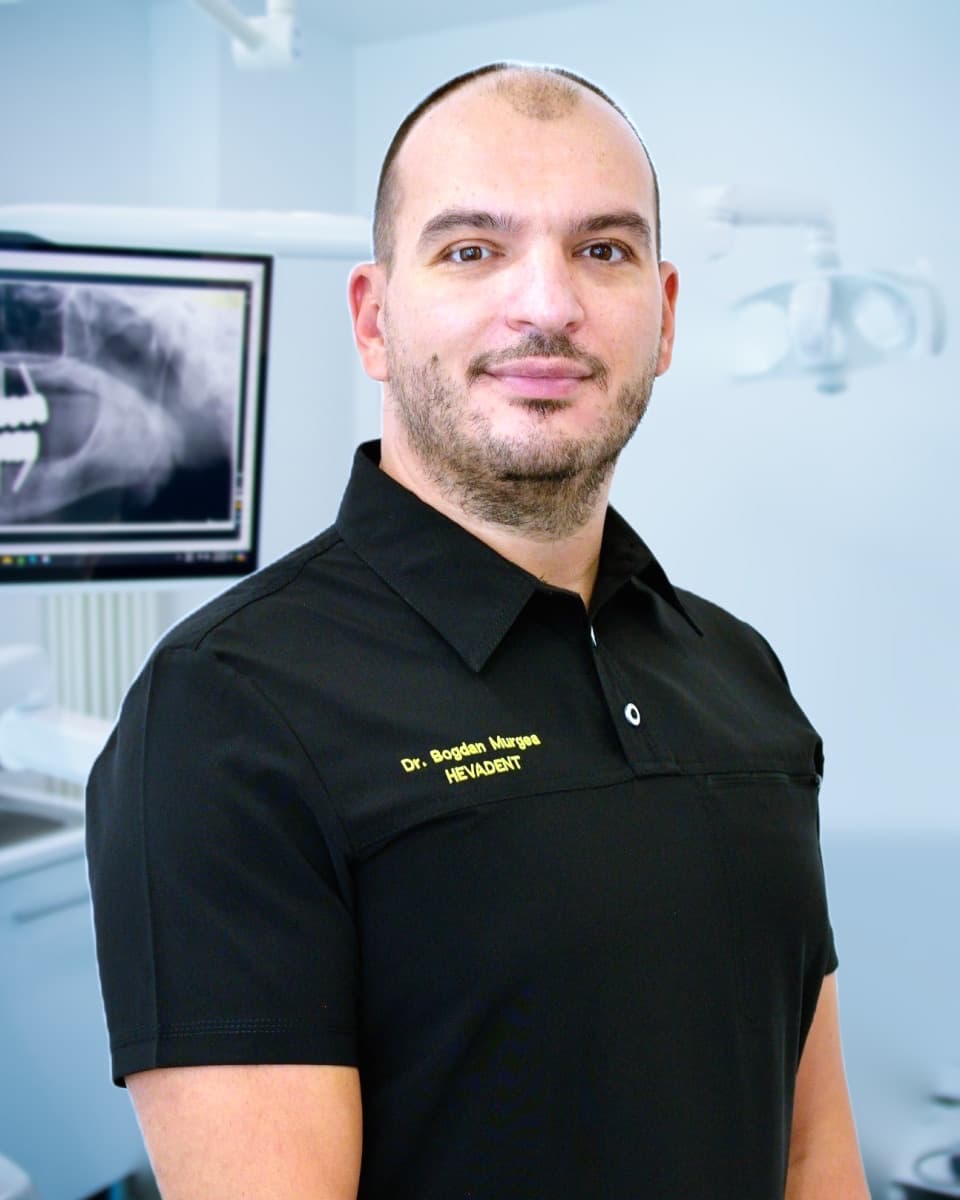
Dr. Valentin Bogdan Murgea
Dentist, with competency in dental radiology
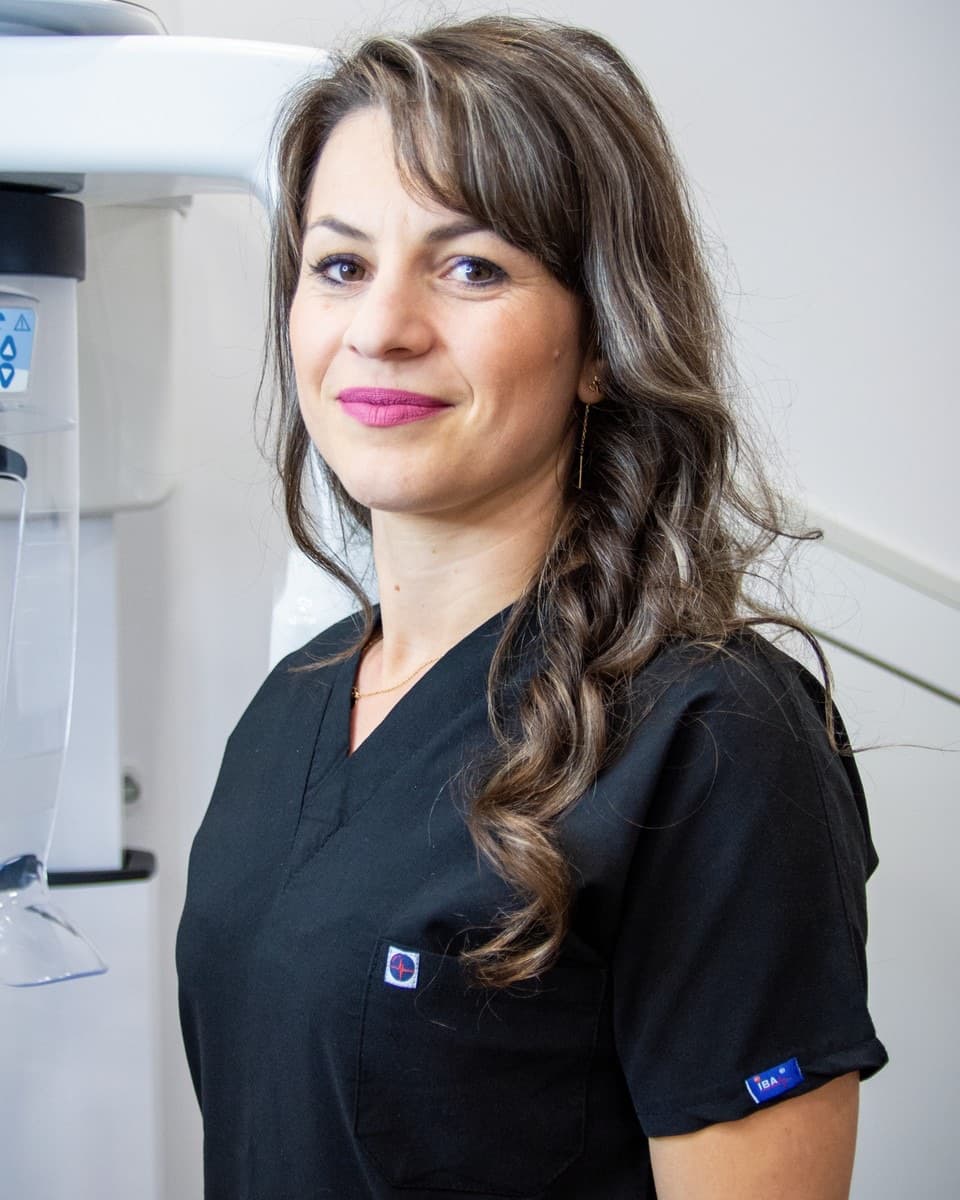
As. Pr. Mihaela Iliescu
Senior radiology nurse (asistent medical principal de radiologie)
Dental radiology and CBCT in Targu Jiu
Strada Victoriei nr. 170, Târgu Jiu, Județul Gorj, 210234opposite Lidl
ParkingPrivate patient car park, entered from Strada Victoriei
Phone0374 003 220Mobile0762 622 208WhatsApp0762 622 208Emailoffice@hevadent.ro
Opening hours
- Monday – Thursday
- 08:30 – 19:30
- Friday
- 08:30 – 15:00
- Saturday – Sunday
- Closed
Related treatments
Book a radiological investigation
Dr. Valentin Bogdan Murgea holds a certified competency in dental radiology, and As. Pr. Mihaela Iliescu is a senior radiology nurse (asistent medical principal de radiologie). A printed intraoral X-ray costs 40 lei, and a CBCT starts at 175 lei per area. Book through the form, or ring 0374 003 220.