
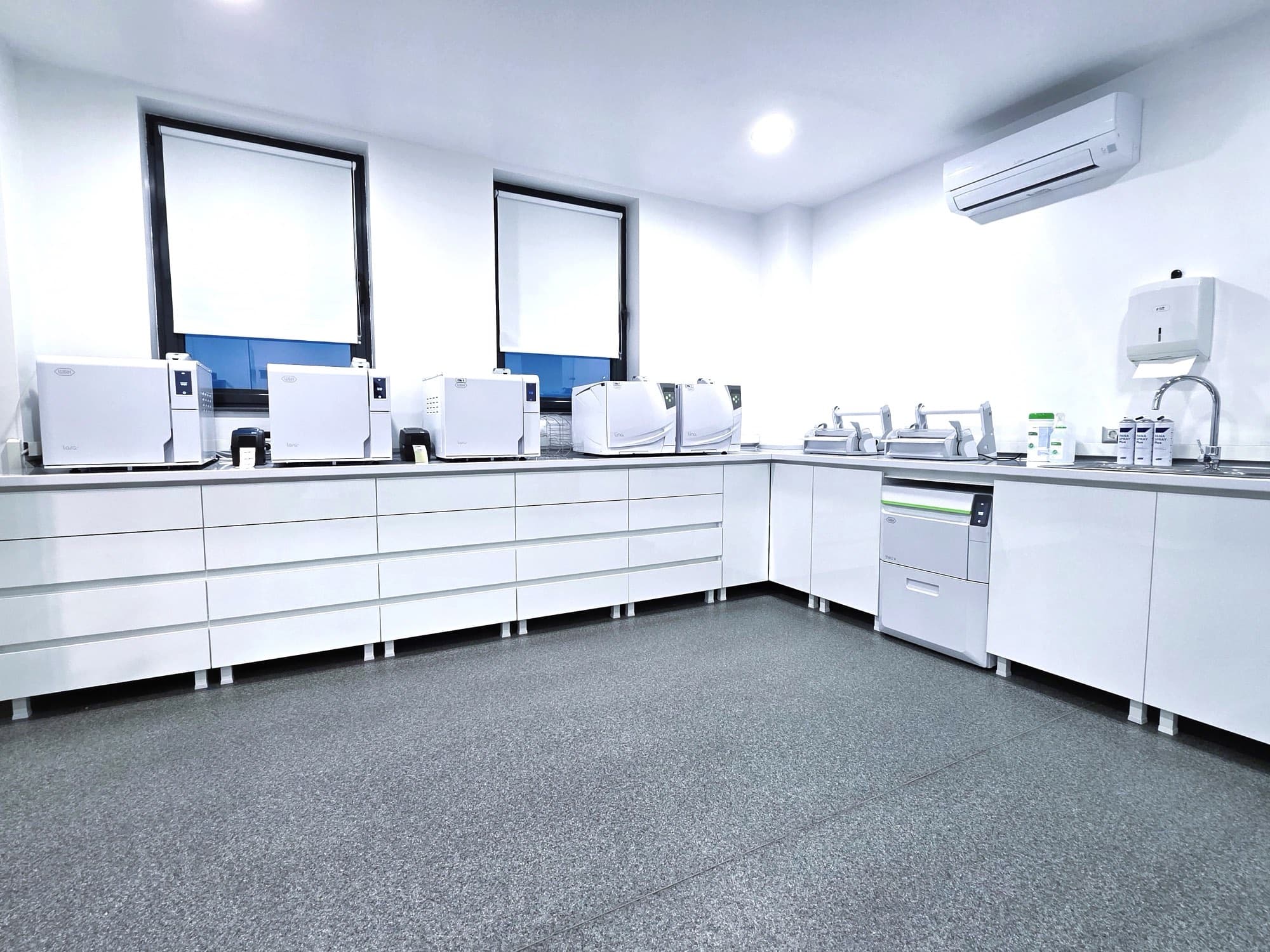
Behind every treatment there is a rigorous process of cleaning, disinfecting and sterilising the instruments, carried out according to safety protocols.
Why does sterilisation matter so much?
Sterilisation destroys micro-organisms, including bacteria, viruses and bacterial spores, preventing infections from being passed on through medical instruments.
When is sterilisation done?
After every patient, reusable instruments that need sterilising go through several stages:
- Pre-disinfection and cleaning by hand or in an ultrasonic bath;
- Disinfection, rinsing, drying and inspection;
- Packing in special pouches fitted with chemical indicators;
- Sterilisation in an autoclave, with pressurised steam;
- Checking the sterilisation cycle and storing the instruments in suitable conditions.
What does instrument traceability mean?
Traceability makes it possible to track and document the sterilisation process, from preparing the instruments to using them.
Each kit is identified, and the details of its sterilisation cycle are recorded and linked to the patient's records, so that the process can be checked.
Patient safety, a priority at Hevadent
Following the sterilisation protocols, checking every cycle and tracing the instruments all contribute to the safety of every treatment.